

Talking with Senior Deputy Prosecutor David Martin (WA) and Program Manager Colleen McIngalls about Using Technology and Civil Legal Aid to Help Protect Domestic Violence Victims

Post Image

The King County Prosecuting Attorney’s Office in Seattle, Washington has provided civil protection to victims of domestic violence for over thirty years through its Protection Order Advocacy Program. They now leverage a tool called Legal Atoms, a software platform in which protection order specialists can work alongside victims remotely to complete the steps necessary to file for a civil protection order. See PowerPoint. The office also created Project Safety, a partnership with civil Legal Aid to provide legal navigators to DV victims to assist them with needed civil services. 

Read More
Procedure

Post Image

Featured Resource

Following proper procedure is key to our criminal justice system to ensure that our work meets the appropriate standards. Keep up with procedural changes and best practices by exploring our resources.

  • Quick Learning Series: Social Media Safety: A Prosecutor’s Approach to Educating High School Students

    One thing is known – the laws and practices on expungement and sealing will continue to evolve and change.

    Social Media Safety: A Prosecutor’s Approach to Educating High School Students

    As part of PCE’s Quick Learning Series, District Attorney Paul Battisti of Broome County, New York, discusses an innovative program from his office aimed at educating high school students on social media safety. Through an office-sponsored competition, local high schools developed videos with tips and reminders for peers as to how to stay safe on social media.

    Read More
  • Strategies for Prosecutor and Non-Legal Staff Retention

    One thing is known – the laws and practices on expungement and sealing will continue to evolve and change.

    Authors: PCE, PCE’s National Best Practices Committee (NBP)

    Prosecutor offices across the nation are taking thoughtful approaches to both counteracting the concerns causing employees to resign, and enhancing the rewarding factors inspiring them to stay. This paper presents a number of these successful methods.

  • Strengthening Justice: Strategies for Effective Prosecutor–Police Partnerships

    One thing is known – the laws and practices on expungement and sealing will continue to evolve and change.

    Author: PERF

    This report explores DA-driven initiatives that have the support of law enforcement members in their jurisdictions—programs that go beyond DAs merely reviewing cases presented by police and then offering plea bargains or prosecuting those cases in court.

    This project was conceived by PERF Deputy Director Jennifer Sommers, a former longtime state and county prosecutor in New York. She has long believed that “effective collaboration between police and prosecutors is the key to moving from good to great,” and partnered with Kristine Hamann to showcase how jurisdictions across the country are putting that principle into practice. Together, they identified examples of innovative, prosecution-led partnerships from around the country that are strengthening public safety and advancing justice.

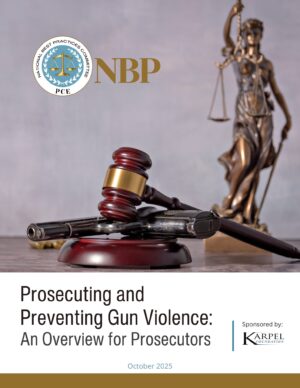
  • Prosecuting and Preventing Gun Violence: An Overview for Prosecutors

    One thing is known – the laws and practices on expungement and sealing will continue to evolve and change.

    Authors: NBP and PCE

    Through research, innovation, collaboration, and outreach, prosecutor offices are developing many effective methods for investigating and litigating these violent crimes, as well as preventing future incidents. This paper provides an overview of some of the successful approaches being used by prosecutors around the country.

  • Science based interviewing

    PCE Pop-Up: Science-Based Interviewing for the Modern Prosecutor and Detective

    One thing is known – the laws and practices on expungement and sealing will continue to evolve and change.

    On September 9, 2025 PCE hosted a Pop-Up on Science-Based Interviewing. It focused on prosecutor’s use of evidence backed techniques grounded in psychology and cognitive science to gather accurate and reliable information from witnesses, victims, and suspects. These methods prioritize rapport-building and open-ended questioning to reduce bias, enhance recall, and strengthen the quality of evidence. If you are interested in the meeting materials, please contact PCE.

    Read More
  • Prosecutorial Workload – The Hidden Crisis in Criminal Justice

    One thing is known – the laws and practices on expungement and sealing will continue to evolve and change.

    Authors: Elaine Borakove, Kristine Hamann, Antonia Merzon

  • Combatting Organized Retail Theft – Challenges and Solutions

    One thing is known – the laws and practices on expungement and sealing will continue to evolve and change.

    Author: PCE

    Retail theft is one of the most common crimes that many jurisdictions face. See how offices across the country are utilizing unique collaborations to prevent these pervasive crimes.

    On February 13, 2025, PCE hosted a webinar on Organized Retail Theft and the challenges and solutions associated.

    Read More
  • Integrating AI: Guidance and Policies for Prosecutors

    One thing is known – the laws and practices on expungement and sealing will continue to evolve and change.

    Author: PCE

    Every prosecutor office is facing questions about rapidly emerging generative AI (GAI) technology and how to use it appropriately. This paper addresses the effective integration of GAI in a prosecutor’s office.

  • Navigating the Challenges of Staffing a Modern Prosecutor Office

    One thing is known – the laws and practices on expungement and sealing will continue to evolve and change.

    Authors: PCE, PCE’s National Best Practices Committee (NBP)

    Maybe you’re facing staffing shortages. Maybe recruiting new lawyers and support staff hasn’t been fruitful. Or maybe you’re having trouble keeping up with the many roles that prosecutors must now take on. See our guide on navigating these challenges and more:

  • Video_doorbells

    Investigative Uses of video doorbells:  A Guide for Prosecutors

    One thing is known – the laws and practices on expungement and sealing will continue to evolve and change.

    Author: PCE

    A new form of evidence can now be found at millions of households across the country. The video doorbell, a device providing a live stream from the front door directly to a person’s phone, has already been used as evidence in countless cases. See how it can be used, the challenges of using a device, and more in our guide for prosecutors: 


Additional PCE Resources

Talking with San Diego’s Chief Deputy DA Tracy Prior about Remote Preliminary Hearings

Post Image

Prosecutors all over the country are finding ways to adapt to the “new normal.” Hear from them in PCE’s new series of video interviews. 

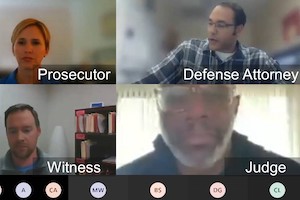
Chief Deputy District Attorney Tracy Prior shares how San Diego conducts preliminary hearings by using a combination of Microsoft Teams, social distancing in the courtroom, and a secure, separate phone line that the defendant and defense attorney can use to communicate privately.

Read More

Virtual Panel Discussion: Prosecuting in a Pandemic

Post Image

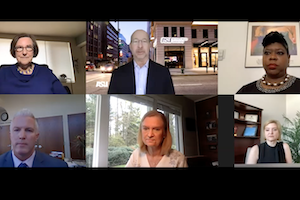
May 2020 – Arizona State University School of Criminology and Criminal Justice, The Morrison Institute for Public Policy, Prosecutors’ Center for Excellence. View the webinar

  • Panelists: Allister Adel (Maricopa County Attorney), Darcel Clark (Bronx District Attorney), Jon Gould (ASU), Kristine Hamann (PCE), Jeff Reisig (Yolo County District Attorney).
  • Additional Materials: May 2020 – Pandemic: A Natural Experiment for Reducing Incarceration Prosecutors Say – ASU Now. Click here